Life Skills (RSHE)
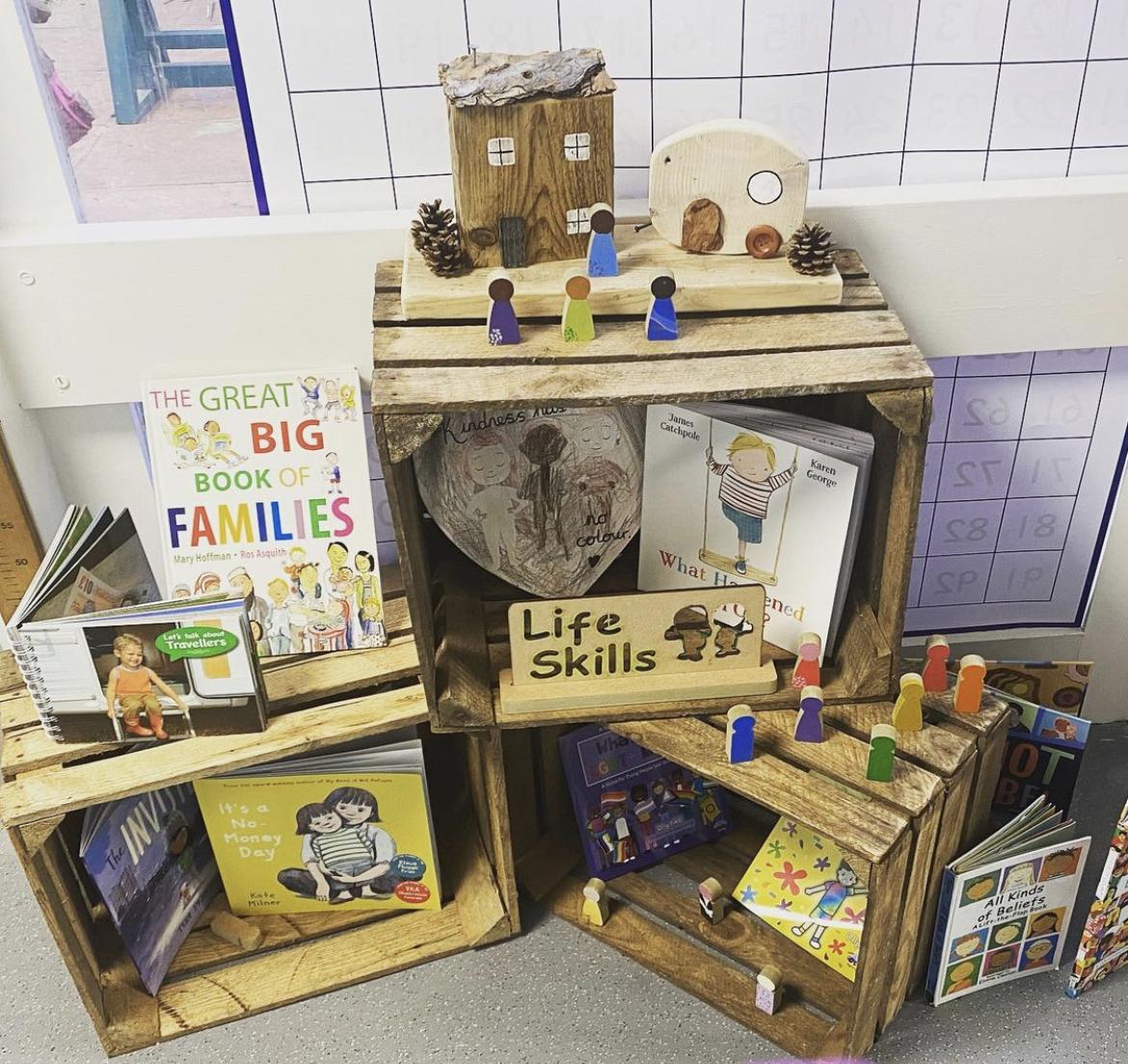
Legislation passed in the Children and Social Work Act 2017 introduces Relationships Education (RSE) as a statutory requirement in primary schools. This applies to all schools in England. New guidance and regulations are to be followed by all schools. At Heartwood, we have used the guidance and developed a curriculum that we call 'Life Skills'.
Intent
At Heartwood, our Life Skills curriculum is designed to equip children with the knowledge, skills, language, tools and cultural understanding they need to navigate life successfully—from childhood through to adulthood. Through a bespoke programme of lessons, tailored to the needs of our pupils, we support learning both within school and across the wider community.
Our curriculum prepares children for key milestones and significant moments in their lives by developing the knowledge, skills and values they need to thrive. It is shaped around the evolving needs of our pupils and community, with regular consultation with children and families informing our curriculum intent. As these needs change over time, our curriculum adapts accordingly.
Heartwood’s vision, values and school rules—Ready, Respectful and Safe—sit at the heart of the Life Skills curriculum. Our ultimate aim is for pupils to understand how to stay safe and healthy, and how to manage their academic, personal and social lives in a positive and confident way. This ambitious goal is carefully broken down into clear learning components and progressive outcomes.
Life Skills lessons provide a safe, informed and respectful environment in which children are encouraged to share their honest thoughts and feelings, developing confidence, empathy and mutual respect.
The key concepts that run throughout the Life Skills curriculum and connect learning are:
- Online safety
- Relationships
- Health and well-being
- Living in the wider world
Implementation
Pupils take part in at least one discrete Life Skills session each week, taught by their class teacher. Lessons are delivered using a wide range of engaging approaches, including drama, stories, videos, debate, discussion, circle time and high-quality texts. Planning is informed by guidance and resources from the PSHE Association and is further enriched through materials from Pol-Ed, the UK Council for Internet Safety and the NSPCC.
Life Skills learning also takes place beyond timetabled lessons and is embedded throughout the wider curriculum and the school’s ‘hidden curriculum’. Children develop these skills during break times, in PE, history and other subjects, when moving around the school, learning to play and work alongside others, and when developing emotional regulation. Teaching is responsive to real-life situations, whether arising between friends, within school, or in response to events in the wider world.
We have invested in specialist resources from Big Talk Education to support our Gypsy, Roma and Traveller (GRT) pupils, ensuring teaching is sensitive to and respectful of cultural beliefs and values. These resources have been created in partnership with the Gypsy Traveller Voice Project and GRT families. We work closely with our GRT families to agree the most appropriate approaches for teaching both statutory and non-statutory aspects of the curriculum.
To further enhance learning, we welcome a range of visitors into school, including the Fire Service, dentists, medical professionals and the Gypsy, Roma and Traveller team, providing children with real-world experiences and expert knowledge.
The curriculum provides a clear core framework, outlined in the overviews below. This core offer is enriched through additional learning opportunities, enabling us to meet the needs of individual children, cohorts and our ever-changing modern society.
Life Skills is taught in flexible units rather than fixed half-term blocks. This allows teaching to respond to assessment, ensuring children are ready to progress or have time to revisit and secure key learning. This approach supports strong retrieval practice, meaningful application and the embedding of knowledge over time.
Current events, contextual issues and cohort-specific needs inform planning and delivery alongside the planned units of learning. Online safety is a key priority and is revisited during the first week of every half-term. We use National Online Safety progression resources to ensure content is up-to-date and that children build securely on their prior learning.
Impact
Life Skills at Heartwood has a positive impact on pupils’ personal development, behaviour and wellbeing. Pupils demonstrate secure, age-appropriate knowledge of relationships, health, wellbeing and online safety, and can confidently explain how to keep themselves and others safe. They consistently apply the school values of being Ready, Respectful and Safe, showing empathy, respect for difference and positive relationship skills. Regular revisiting of key content, particularly online safety, ensures strong retention and application of learning over time. All pupils, including those with SEND and from diverse cultural backgrounds, access Life Skills successfully through high-quality teaching and targeted support. As a result, pupils are well prepared for the next stage of education and for life in modern Britain.
Assessment
Pupils are assessed in a variety of ways to see what knowledge they have maintained in their long-term memory from the identified curriculum taught. Assessment is also informed by the way that children embed and display their understanding of concepts- for example respecting others.
Key knowledge is identified for each year group and they are then condensed into end of key stage goals for children to meet to be confident and ready to access the next phase of learning.
Withdrawing your child from lessons
As the subject is now statutory (compulsory) children will not be allowed to be withdrawn from any statutory lessons. If a child misses a key lesson or lessons due to illness or holiday, these lessons will be delivered at another appropriate time.
Children can be withdrawn from sex education (reproduction) after a discussion with the Headteacher. However, they cannot be withdrawn from lessons on reproduction from a scientific viewpoint, puberty or lessons to do with relationships.
How do we ensure all children can access RSHE lessons?
Our RSHE planning is designed to ensure that all children are able to access lessons and are enthusiastic learners. Adaptation within lessons is a vital component to ensure that a balance of support and challenge are achieved for all abilities. Adaptation is adjusted as expectations of individual pupils rise through progress. Effective quality first teaching is the key to enabling all children to participate and develop personally, socially and emotionally.
It is recognised that SEND pupils may require additional support with the RSHE curriculum and can be at increased risk of exploitation. For this, we can utilise our Big Talk resources.
Individual support or targeted programmes may be considered. Parents and pupils will be involved and consulted.
Parent and Carer Resources
- Parental Engagement PowerPoint
- Top tips for talking with your child
- Letter for KS2 parents/carers regarding school period support
- RSHE letter for parents/carers with guidance updates May 2024
- Communication to schools on the implementation of Relationships Education Relationships and Sex Education and Health Education.pdf
- Our school is committed to RSE poster
- Department for Education information on RSHE
- Parent Questions and Answers DFE
- Big Talk Education resources
- Childline video We share this with children at least half termly and regularly refer to it with the children
- NSPCC PANTS video We watch this at least half termly with children and in response to need
- Its Okay to be Different read by Todd Parr
-
Inspiring The Future - Redraw The Balance
Boys Vs. Girls - Who's Stronger?
Love Has No Labels - Diversity & Inclusion
And Tango Makes Three